Picture this: you’re steering your small business ship through the tumultuous seas of entrepreneurship. The winds are fierce, and the waves are unpredictable. But what if I told you there’s a life jacket that can keep your venture afloat, even when the waters get rough? Enter the world of small business insurance, an essential safeguard for your enterprise.
In this comprehensive guide, we’ll dive deep into the core elements of small business insurance, unraveling the types of coverage available, and why they’re indispensable. Whether you’re a startup or an established business, understanding these insurance essentials can mean the difference between smooth sailing and a shipwreck.
Understanding Small Business Insurance
Did you know that 40% of small businesses will experience a property or liability loss in the next decade? Protecting your business isn’t just smart; it’s essential.
Small business insurance is your financial safety net. It ensures that when unexpected events happen, you’re not left in the lurch. Different types of insurance cover various aspects of your business, and understanding these can be the difference between success and failure.
Types of Insurance for Small Businesses
There are several types of insurance that a small business owner should consider. General liability insurance covers damages or injuries occurring on your premises. Property insurance protects your physical assets like buildings and equipment. Professional liability insurance is crucial if you offer services, as it covers negligence claims.
Here is the deal: combining policies can often save you money. It’s called a Business Owner’s Policy (BOP), and it’s designed for smaller businesses to bundle essential coverages together.
The Importance of Insurance for Small Businesses
Imagine a fire, theft, or lawsuit hitting your business tomorrow. Could you recover? Insurance is not just a safety cushion; it’s a lifeline. Without it, many small businesses wouldn’t survive the impact of a significant loss.
Small businesses tend to overlook insurance due to cost concerns. BUT, the cost of being uninsured far outweighs the premiums you’d pay. Investing in insurance is investing in your company’s future.
Liability Insurance Benefits
Liability insurance isn’t just a nice-to-have; it’s a must-have. Why? Because it protects you from financial losses resulting from claims of injury or damage. It covers legal fees, settlement costs, and medical expenses.
Pro Tip: Always check if your liability insurance includes product liability if you sell physical goods.
It gives you peace of mind, knowing that one accident won’t bankrupt your business. But remember, not all policies are created equal. Read the fine print to know exactly what is covered.
Comparing Insurance Providers
Choosing the right provider can be daunting. But here’s how to break it down:
| Provider | Offerings | Pros | Cons |
|---|---|---|---|
| Provider A | General, Professional, Property | Comprehensive coverage, Affordable | Limited customer service hours |
| Provider B | General, Property | Strong reputation, Fast claims processing | Higher premiums |
Compare their offerings and consider your specific needs. Do they offer 24/7 support? Are their premiums competitive for the coverage you need? Make sure you get quotes from multiple providers before making a decision.
Key Components of Business Insurance Policies

Did you know that 40% of small businesses have never been insured? Shocking, right? Let’s make sure you’re covered.
Understanding the key components of a small business insurance policy is crucial. It’s not just about having any policy; it’s about having the right one. So, what are these must-have components?
Essential Elements of Comprehensive Coverage
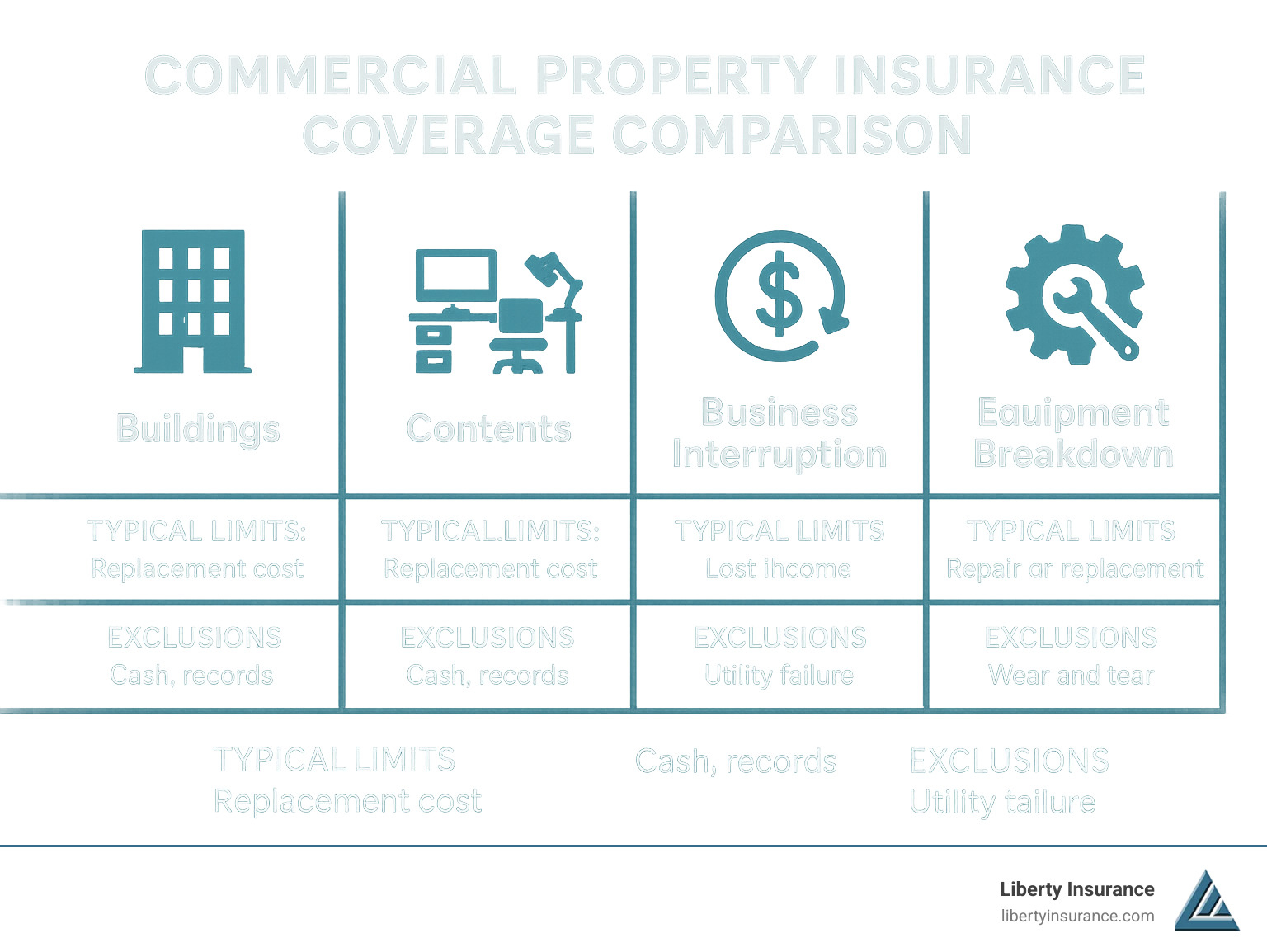
The backbone of any solid business insurance policy includes general liability, property insurance, and business interruption coverage. Each plays a unique role in shielding your business from potential threats.
General liability covers you against claims of bodily injury or property damage. Property insurance protects your physical assets, like buildings and equipment. And business interruption insurance? It compensates for lost income if you can’t operate due to a covered peril.
Common Terms and Conditions
Let’s break down the fine print. Every business insurance policy will have specific terms and conditions you need to know.
| Term | Description |
|---|---|
| Premium | The amount you pay for your policy. |
| Deductible | The amount you pay out-of-pocket before insurance kicks in. |
| Exclusion | Specific risks not covered by the policy. |
| Coverage Limit | The maximum amount an insurer will pay under a policy. |
Coverage Limits and Exclusions
Here is the deal: every policy has its limits and exclusions. These dictate how much you can claim and what situations are not covered.
For example, a policy might have a $1 million liability limit, meaning that’s the most it’ll pay for covered losses. BUT, if an exclusion applies, like damage from a flood, you’re on your own unless you’ve got that specific coverage.
The Role of Deductibles
Deductibles can feel like a twist in the plot, but they’re just your share of the financial responsibility. A deductible is what you pay before your insurer steps in. Higher deductibles usually mean lower premiums, which can be a smart move if you’ve got cash reserves.
Pro Tip: Opt for a higher deductible if you’re looking to reduce your monthly premium costs.
Remember, choosing the right deductible is a strategic decision. It’s like playing the insurance game on hard mode, but with bigger rewards.
Cost Factors and Budgeting for Insurance
Is your small business insurance breaking the bank? You might not be considering all the cost factors.
Understanding what affects your insurance premiums can save you money. Insurance costs can vary greatly, and it’s crucial to know the drivers behind this to make informed decisions.
Factors Influencing Insurance Costs
Let’s dive into what impacts those premium prices. Business size and industry type are at the top. A larger business or high-risk industry like construction will pay more. Your claims history also plays a role. Frequent claims can raise your rates over time.
And don’t forget, the coverage limits and deductibles you choose have a big say too. Higher coverage limits mean higher premiums, but choosing a higher deductible can lower your monthly cost.
Effective Budgeting for Insurance Premiums
Budgeting for insurance isn’t rocket science. But mess it up, and you could be in for a financial surprise.
Start by listing out all potential costs and setting a maximum budget. Allocate funds monthly rather than annually if cash flow is tight. This not only helps in balancing your books but also in avoiding surprises.
Pro Tip: Schedule a review of your policy every six months to ensure you’re not over or underinsured.
Reducing Insurance Costs without Compromising Coverage
You might think cutting costs means cutting coverage. But that’s where you’re wrong.
Bundling policies can be a smart move. Combining general liability with property insurance might save you a chunk of change. Also, consider increasing your deductible—but only if you can pay it in the event of a claim. Implementing risk management practices like security systems or employee training can also earn you a discount.
Typical Cost Ranges for Small Business Insurance
Here’s a quick glance at what you might expect to pay for various types of insurance:
| Insurance Type | Cost Range (Annually) |
|---|---|
| General Liability | $400 – $1,000 |
| Professional Liability | $500 – $3,000 |
| Workers’ Compensation | $1,000 – $3,000 per employee |
| Commercial Auto | $750 – $1,200 per vehicle |
Claims Process and Management
Have you ever wondered what actually happens when you file an insurance claim? You might be surprised to learn that less than half of small businesses know the full claims process!
Understanding how to efficiently manage your insurance claims is crucial. Not only does it save you time, but it also ensures you get the compensation you deserve.
The Process of Filing a Claim
When disaster strikes, the first step is to notify your insurance provider immediately. This gets the ball rolling. They’ll give you a claims number and assign you an adjuster. Your job? Gather all the necessary documentation, like receipts and photos, to support your claim.
Efficient Claim Management Practices
Here is the deal: you need to stay organized. Keep a log of all communications and document every detail. Regular follow-ups with your adjuster can keep the process on track.
Pro Tip: Create a dedicated folder (physical or digital) just for insurance claims. Trust me, it will make your life easier!
Documenting Incidents for Insurance Purposes
Accurate documentation is your best friend. This includes police reports, witness statements, and a detailed account of the incident. The more evidence you have, the stronger your case will be.
| Step | Action |
|---|---|
| Step #1 | Notify your insurer immediately. |
| Step #2 | Document everything thoroughly. |
| Step #3 | Stay in constant communication with your adjuster. |
| Step #4 | Follow up regularly until the claim is resolved. |
How to Resolve Common Claim Disputes
Disputes happen, but they don’t have to be deal-breakers. First, review your policy to understand your coverage. Then, communicate any discrepancies to your insurer with supporting evidence. Remain persistent, but professional.
Real-life Case Studies of Small Business Insurance
You might think your business is well-protected, but have you considered every angle? Many small businesses overlook the critical role insurance can play in their survival.
When disaster strikes, insurance is often the unsung hero that helps businesses bounce back. But let’s dive into some real-world examples to see how this plays out.
Successful Claim Resolutions
Meet Jane, a bakery owner whose store was devastated by a fire. Her comprehensive insurance policy not only covered the damage but also helped her rebuild within three months. The coverage included property damage and business interruption, crucial elements that kept her afloat during tough times.
On the other hand, Mike, who runs a small tech startup, faced a cyber-attack that could have crippled his operations. Thanks to a cyber liability policy, he managed to cover the costs of the breach and reinforce his security measures.
Lessons from Businesses Without Proper Insurance
Unfortunately, not all stories have a happy ending. Sarah, who owned a boutique, learned this the hard way. She didn’t have insurance for natural disasters, and when a flood hit, she lost everything. Her business couldn’t recover from the financial blow, which underscores the importance of having a robust insurance plan.
“Insurance isn’t a luxury; it’s a necessity for survival.”
Another tale of caution comes from a local café that didn’t have liability insurance. A customer slipped, sued for damages, and the legal fees alone drove the owner into debt.
Industry-Specific Insurance Challenges and Solutions
Different industries face unique challenges. For example, the construction sector often deals with worker’s compensation claims, while retail businesses worry about theft and vandalism. Industries need tailored insurance plans that address their specific risks.
Pro Tip: Always consult with an insurance specialist who understands your industry. They can highlight potential risks and help customize a policy that covers you comprehensively.
Insurance’s Role in Business Recovery
Insurance can be a lifeline in dire situations. After Hurricane Katrina, a New Orleans-based restaurant used its insurance payout to relocate, rebrand, and thrive. This move not only saved their business but also created new jobs.
Similarly, a small manufacturing firm faced a major equipment failure but had coverage for machinery breakdown. This allowed them to replace the equipment swiftly and maintain production, proving that timely insurance payouts can save businesses from significant downtime.
Future Trends in Small Business Insurance
Did you know that the global insurance industry is about to hit $1.5 trillion by 2025? Small businesses are a big part of that pie.
But here’s the kicker: trends are constantly evolving, shaping the way we approach insurance. Let’s dive into what’s on the horizon for small business insurance.
Emerging Trends in the Industry
Small business insurance is not static. It’s like a living organism, adapting and evolving. With the rise of gig economy workers and more businesses going digital, coverage needs are changing fast. Expect policies to become more tailored, meeting the unique risks associated with modern business models.
Technological Advancements in Policy Management
Technology is shaking things up. Imagine managing your insurance policy with just a few swipes on your phone. Well, it’s happening! Insurtech companies are bringing AI and data analytics into play, making policy management smarter and more personalized. This not only speeds up the process but also makes it more intuitive for you.
Pro Tip: Use apps that leverage AI for policy management to save time and reduce human error.
Economic Shifts and Insurance Needs
The economy doesn’t stand still, and neither should your insurance strategy. Inflation, market volatility, and global events can all impact your insurance needs. Here’s the deal: stay proactive and regularly review your coverage to ensure it aligns with the current economic climate. This way, you’re not caught off-guard when things shift.
Role of Digital Tools in Enhancing Policy Accessibility
Ever been frustrated by the paperwork involved in insurance? Digital tools are changing that game. Online platforms and apps are making it easier than ever to access and update your policies. This means you can focus more on running your business and less on administrative hurdles.
Summary
As we anchor our exploration into the realm of small business insurance, it’s clear that having the right coverage is more than just a safety net—it’s a strategic maneuver for future-proofing your business. From navigating claims to leveraging emerging trends, being well-versed in insurance can transform potential setbacks into stepping stones for growth. So, chart your course wisely, and let insurance be the wind in your sails.
Common Queries
What types of insurance are essential for small businesses?
General liability, property insurance, and professional liability are crucial for most small businesses, providing coverage for common risks.
Why is liability insurance important for small businesses?
Liability insurance protects against claims related to injuries, accidents, and negligence, safeguarding your business from costly legal fees.
How can I reduce my insurance costs?
Consider bundling policies, increasing deductibles, and implementing risk management practices to lower premiums without sacrificing coverage.
What are the common exclusions in small business insurance policies?
Policies often exclude intentional damage, wear and tear, and certain natural disasters. It’s crucial to read your policy terms carefully.
How does the claims process work?
Notify your insurer promptly, document the incident thoroughly, and follow your provider’s claims procedure to ensure a smooth resolution.
Can insurance help with business recovery after a disaster?
Yes, with the right coverage, insurance can provide financial support for rebuilding and resuming operations after unexpected events.
Are digital tools useful in managing business insurance?
Absolutely, digital tools enhance policy accessibility and management, making it easier to track coverage and file claims efficiently.
